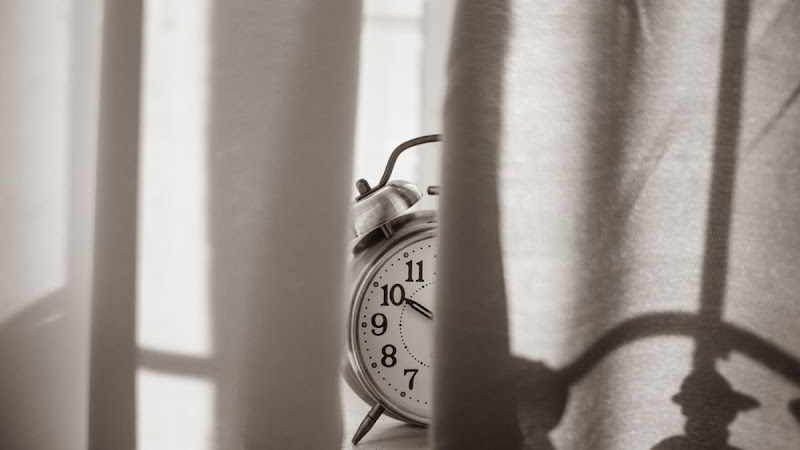


Sleep is not something you can decide to do. You can only set up the conditions and let it arrive, which is why lying in the dark trying harder never works. Nearly all natural sleep tips worth following are really about the hours beforehand: what the light was doing, when you last ate, how wound up the last hour of the evening was. Get those right and falling asleep stops being a task.
It helps to think of the evening as a countdown rather than a bedtime. Each of these has a reason behind it, and you do not need all of them to notice a difference.
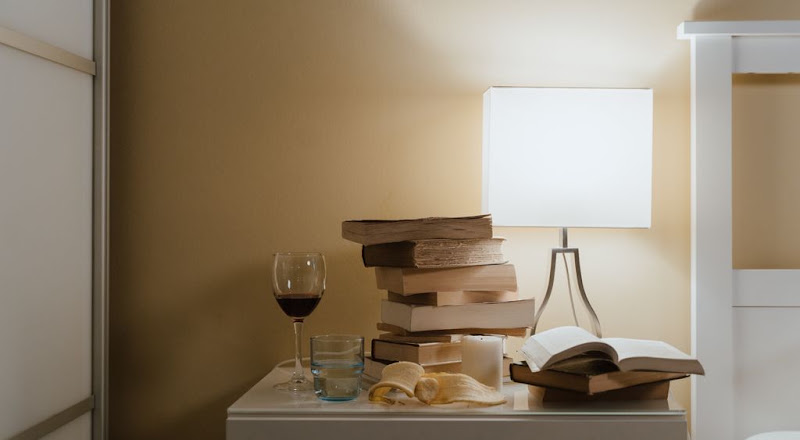
A bedroom that is cool, dark, and quiet removes most of the obstacles before you get into bed. Cool matters more than people expect; a room that feels slightly too cold when you climb in is usually about right once you are under the covers. Dark means properly dark — standby lights, a bright street lamp through thin curtains, and a charging phone all register even through closed eyelids.
Keeping work out of the room matters too. A bedroom that doubles as an office slowly becomes a place associated with alertness rather than rest, and that association is hard to argue with once it forms. Among habits that improve sleep quality, moving the laptop out is one of the few that costs nothing and works immediately.
Good nights are partly built during the day. Daylight in the first hour after waking anchors the whole cycle, and ten minutes outdoors does more than an hour of indoor light through glass. Movement helps as well, ideally not in the last couple of hours before bed.
The most useful daytime rule is also the least popular: get up at roughly the same time regardless of how the night went. Sleeping in to recover after a bad night pushes the next one later and starts a cycle that takes a week to unwind. A steady wake time is the backbone that holds a consistent sleep routine together.
None of this works on the first night, and expecting it to is how people conclude it does not work at all. Sleep patterns shift over roughly two weeks, so pick two or three changes, keep them going for that long, and judge by how the mornings feel rather than by any single night.
If poor sleep has persisted for months, or you wake unrefreshed despite doing everything right, that is worth raising with a doctor rather than troubleshooting alone. Ordinary healthy sleep habits help ordinary bad sleep; they are not a substitute for a proper look at something persistent.
Start with the easiest two: dim the lights an hour before bed, and get up at the same time every day including weekends. Add the caffeine cut-off if dropping off is the problem, and cool the room if staying asleep is. Two weeks is enough to tell. More everyday wellbeing guides take the same slow, unexciting approach, largely because it is the one that holds.
Should you want something else to read tonight, FactMates keeps a good stock of it.