



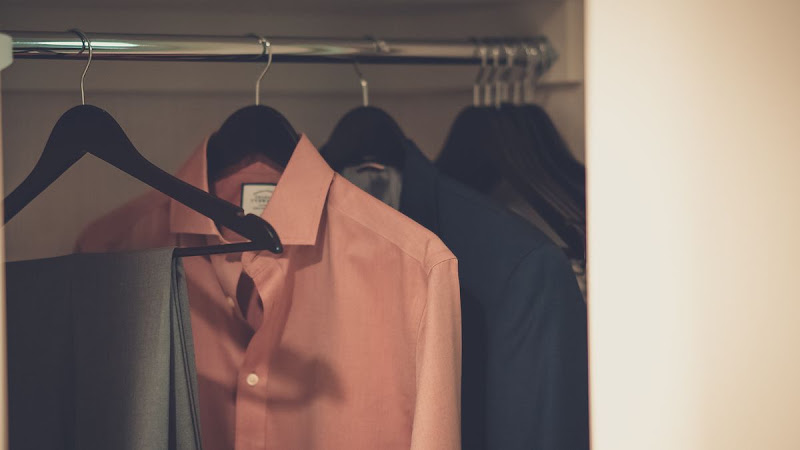
Most closets contain more outfits than their owners think. The clothes are there; the combinations simply have not been tried. People tend to settle into a small rotation within a few weeks of buying anything, and after that the rest of the rail becomes background. Shopping your own closet means going back through it with fresh eyes and treating what you already own as new material.
It is a useful exercise for anyone who feels stuck with nothing to wear despite a full wardrobe. It also tends to be far more productive than another shopping trip, because it works with pieces that already fit and already suit you.
The first step is physical. Pull everything out, or at least everything for the current season, and put it somewhere you can see it all at once. A bed works. Clothes that stay hidden behind other clothes do not get worn, and half the point of the exercise is to bring the forgotten third of the closet back into view.
Sort into three rough piles as you go: things worn often, things worn rarely, and things not worn in a year. The middle pile is where the value sits. Those are the pieces that fit and that you liked enough to buy, but never found a partner for.
Take one item from the rarely-worn pile and build three outfits around it, using only what is already on the bed. Not two, not one. Three forces you past the obvious pairing into combinations you would not otherwise try. If you cannot reach three, the item may genuinely be the problem rather than the styling, and that is worth knowing too.
Photograph each combination that works. A phone photo is a far better record than memory, and a small album of tried outfits removes almost all of the guesswork on a rushed morning. It is the same habit behind most of the outfit planning advice that people actually stick with.
An outfit that feels tired usually only needs one element changed. Put a knit over the dress you always wear alone. Wear the blazer with jeans instead of the pants it came with. Switch the shoes and nothing else. These single-element swaps produce genuinely different results while leaving the parts that already work untouched.
Suits, matching sets and coordinated pieces tend to be worn as units, which wastes half their potential. A suit jacket is also a blazer. Suit pants are also office pants. A matching top and skirt are two separate items that happen to have been bought together. Splitting them roughly doubles what the set contributes, and it is one of the quickest wins in any wardrobe audit.
The same two garments look different depending on how they sit. A shirt tucked in reads differently from the same shirt loose. Sleeves rolled to the elbow change the line of a jacket. A belt at the waist turns a shapeless dress into a defined one. None of this costs anything, and it is often the difference between an item that feels dated and one that does not.
A fair share of the rarely-worn pile is rarely worn for a fixable reason. A hem that sits wrong, a missing button, a stretched neckline, a stain that was never treated. Set these aside as a small repair list rather than putting them back on the rail, where they will be skipped for another year.
Take the items that need a tailor in one trip. A hem taken up or a waist taken in costs a fraction of a replacement and usually turns a dead item into a regular one. The rest can be handled at home in an evening, and good clothing repair basics cover most of what comes up.
How clothes go back matters as much as what comes out. Group by type rather than by outfit, keep the current season at eye level, and make sure nothing is stacked so deep that the bottom layer disappears. If a piece has to be excavated, it will not be worn.
Keep the photo album from earlier somewhere easy to reach. Running through the exercise twice a year, at the seasonal changeover, keeps the whole closet in circulation rather than letting a small rotation take over again. Simple wardrobe habits like this one do more for how you dress than most purchases. There is a good deal more to dig into on FactMates.