
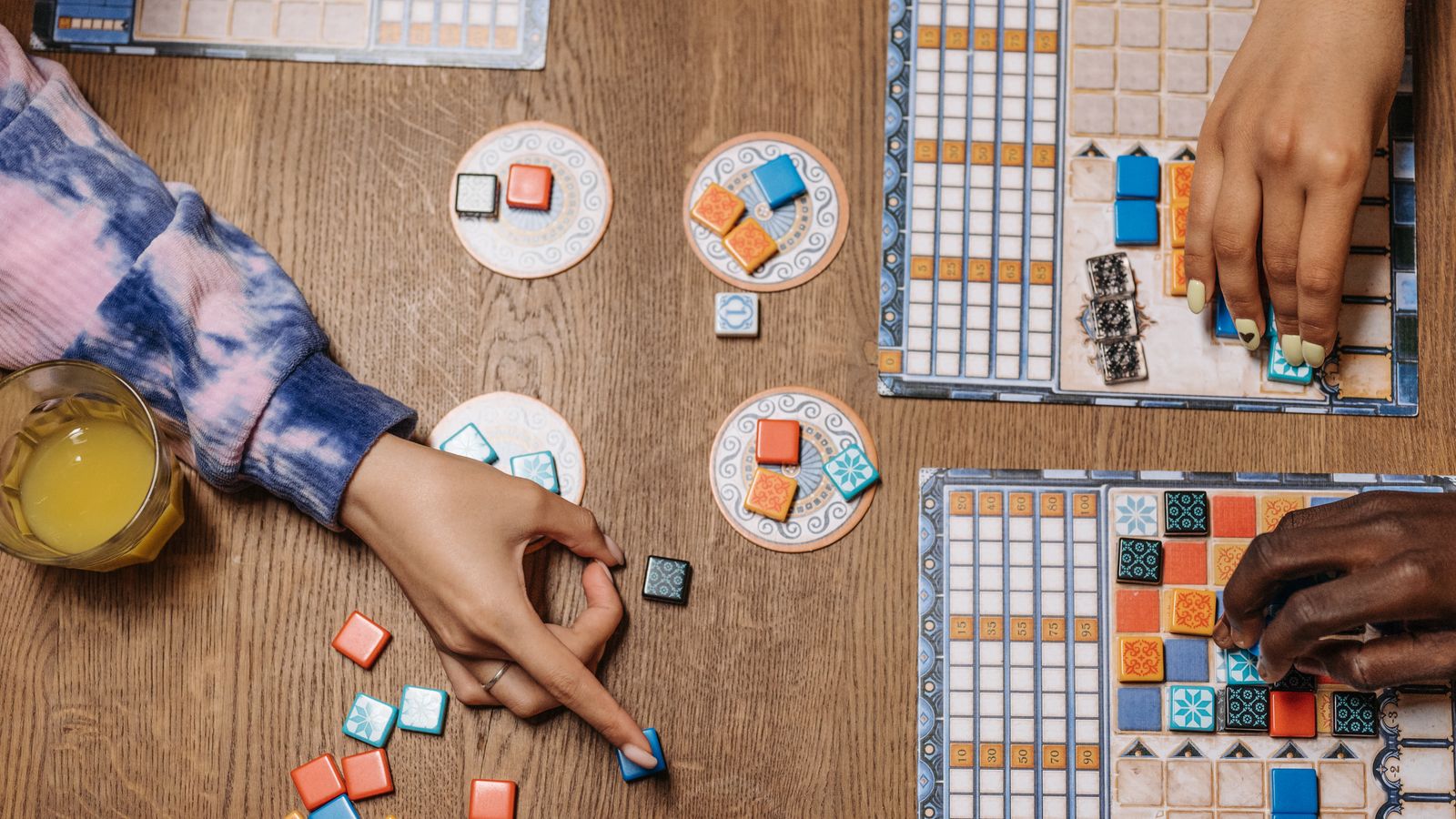

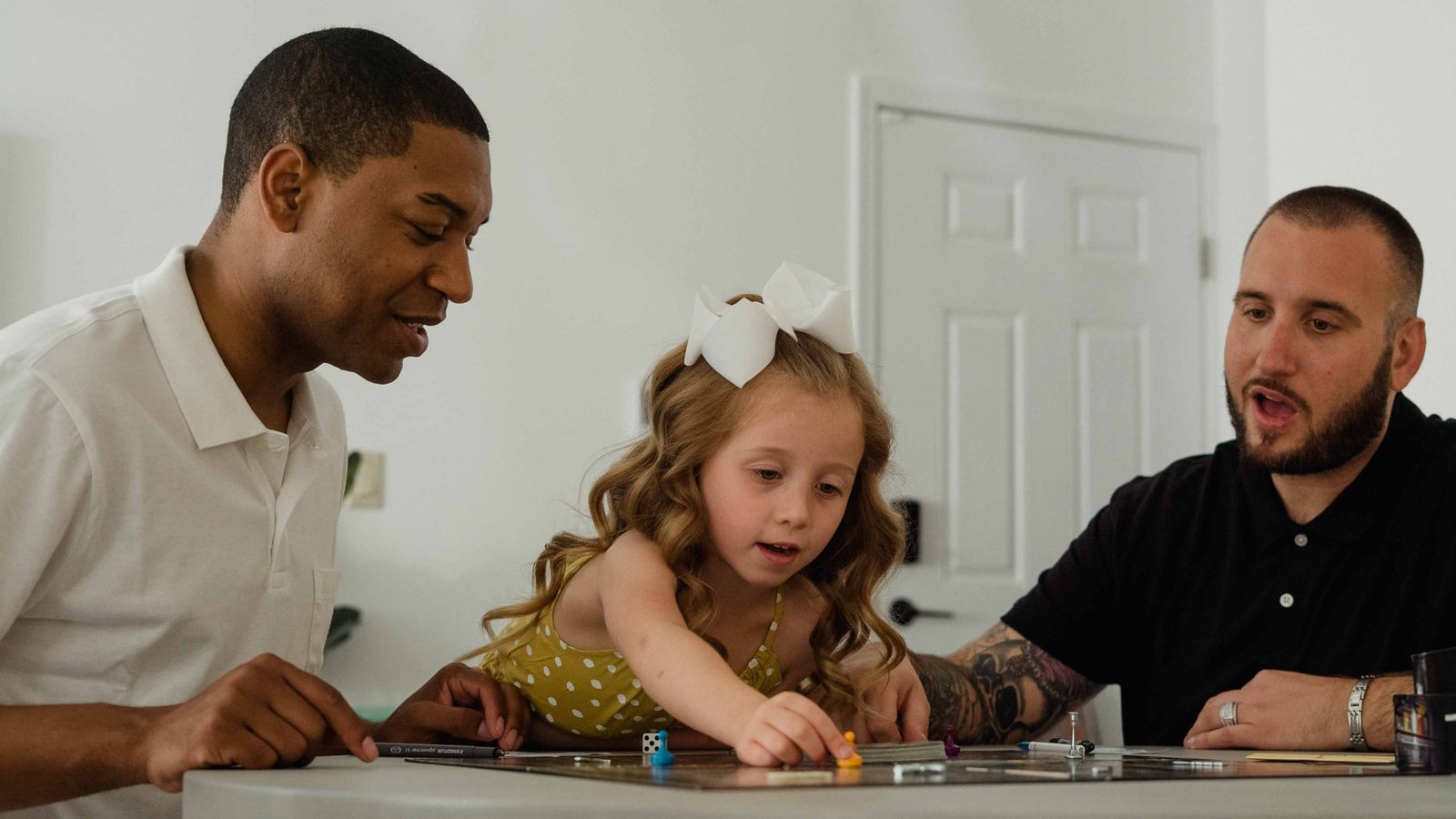
A game night with a nine-year-old, two parents and a grandparent is a harder design problem than it looks. Anything built for one of those groups tends to lose the others, and the failure is usually visible within ten minutes: somebody has stopped following, somebody else is waiting.
The games that survive the mix share a few properties, and knowing what they are makes choosing much faster than reading reviews written for a different table.
Three things, in order. Rules that can be explained in under five minutes, so nobody is lost before the first turn. Turns short enough that waiting never becomes the main experience. And a result that is not decided by the thing adults are simply better at, which is usually reading speed, vocabulary or long-term planning.
That last one is the most commonly missed. A game where experience compounds will be won by the same person every time, and a child who cannot win does not want a second game.
A fourth property matters once the group is larger than four: the game should still work if somebody leaves the table for ten minutes. Mixed groups are rarely sitting still for a full hour, and a game that collapses when a player steps away ends up abandoned halfway through.
The best candidates take minutes to teach and still have something to think about on the twentieth play. That combination is rarer than it sounds and it is worth using as the main filter.
It rules out most of what sits on a shelf looking impressive. A thick rulebook means the first half hour is a lecture, and in a mixed group the lecture is where you lose people. If the explanation needs a worked example, it is the wrong game for this particular evening.
The box is a poor guide here. Recommended ages tend to describe reading level rather than how well a game holds a mixed table, and plenty of titles labelled for adults are simpler to teach than games sold for children. Judging by how long the rules take to explain is more reliable than anything printed on the side.
Co-operative games deserve the top spot. Removing the competition removes most of what makes a mixed table awkward, and a group that loses together usually asks to play again.
Explain the goal first, then the turn, then stop. Everything else can be covered as it comes up, and most rulebooks are written in exactly the wrong order for a live table.
Play the first round openly, with everyone's hand visible and advice allowed. It costs one round and it means the real game starts with everybody actually playing rather than three people playing and two guessing. For a group that does not play often, this single habit does more than any amount of choosing the right game.
Watch for the quiet signs rather than waiting for someone to say so. Somebody asking what is happening twice, somebody on a phone between turns, somebody who has stopped planning and is just taking the obvious move. Any of those means the game is too long or too heavy for this table tonight.
It is entirely reasonable to stop a game early and start a shorter one. A finished short game is a better evening than an abandoned long one, and nobody remembers the score anyway.
Aim for five minutes of rules, short turns and a winner that is not predetermined by age. Lead with something co-operative if the group is new to each other, teach by playing rather than explaining, and keep a short game in reserve. Get those right and the specific titles matter far less than people assume. FactMates covers plenty of other ways to get people round a table.